


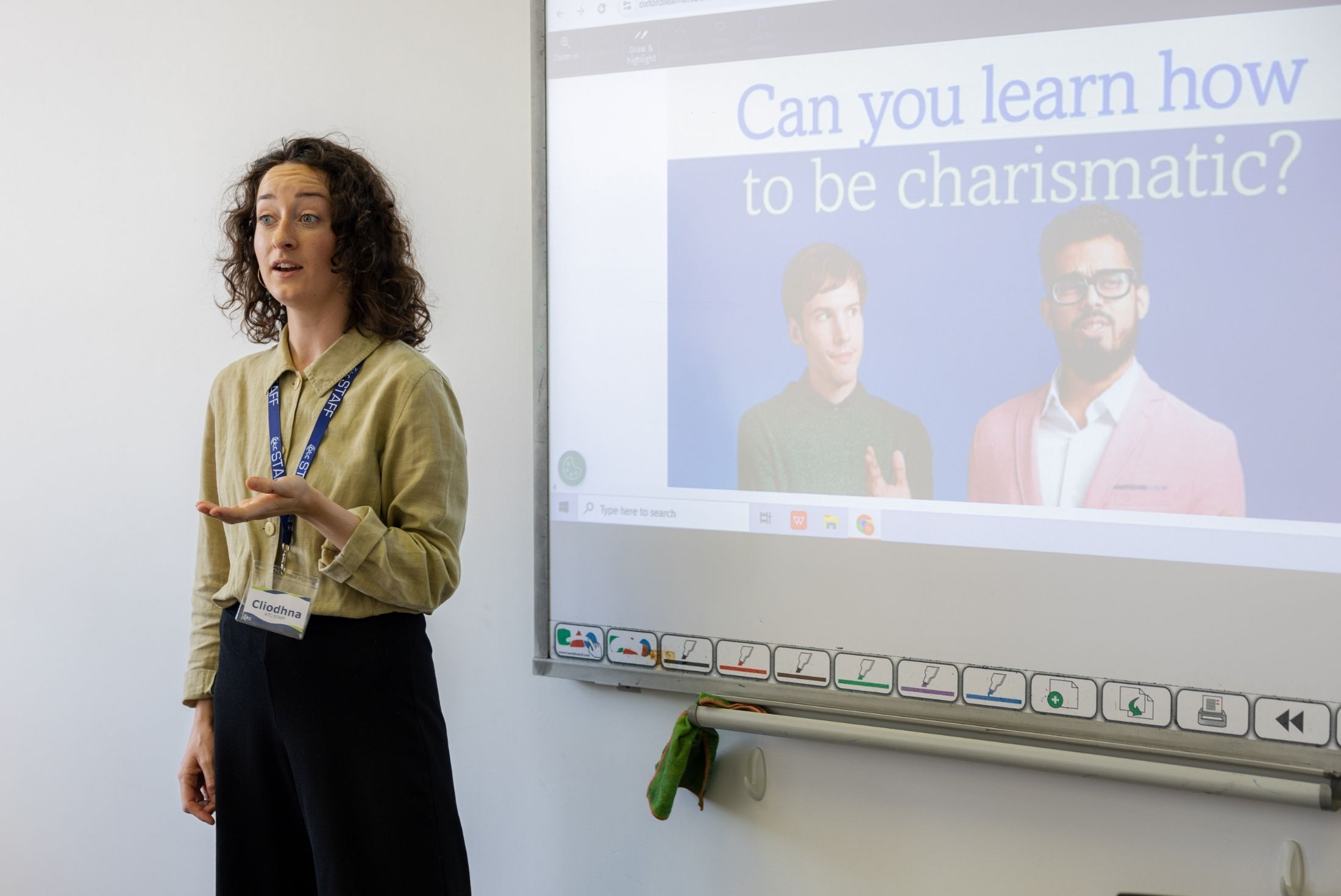
The Role of Artificial Intelligence in Education: 10 Practical Strategies for the Language Classroom
Artificial Intelligence has moved very quickly from a theoretical discussion into a practical reality for educators. In classrooms across Europe, teachers and learners are already using AI powered tools to draft texts, generate ideas, check language accuracy, and organise information.
For education professionals, the question is no longer whether AI will influence teaching and learning. That moment has already passed. The real challenge now is understanding how to integrate these technologies in ways that strengthen learning rather than weaken it.
This conversation is particularly relevant within the European education landscape. Digital transformation is one of the core priorities of the Erasmus+ programme for 2021–2027, which encourages institutions to explore innovative pedagogical approaches, strengthen digital competence among staff and learners, and modernise educational practice.
Artificial Intelligence has the potential to support these goals, but only when it is used thoughtfully. AI should not replace the role of the teacher, nor should it remove the effort required for learning. Instead, it should function as a supportive tool that helps educators create richer learning environments.
For language teachers in particular, AI offers interesting opportunities. It can support personalised learning, generate authentic materials, and provide learners with additional opportunities to practise language outside the classroom.
The key is balance.
Below are ten practical ways educators can use Artificial Intelligence in the language classroom while maintaining strong pedagogical foundations.
1. Personalised Vocabulary Expansion
One of the most useful applications of AI in language teaching is its ability to generate contextualised vocabulary. Teachers can ask AI tools to create lexical sets related to specific professions, academic fields, or communication scenarios.
For example, learners preparing to work in tourism may need vocabulary related to customer service and hospitality, while university students may need support with academic presentation language or research terminology. AI tools can quickly generate example sentences, dialogue prompts, and situational vocabulary that would normally take teachers significant time to prepare.
Of course, the teacher still plays the central role. Educators must review and adapt the material to ensure accuracy and relevance. When used this way, AI becomes a preparation tool that supports teachers rather than replacing them.
2. Differentiated Task Creation
Mixed ability classrooms are common in language education. Teachers frequently work with groups where learners have different proficiency levels, learning speeds, and linguistic confidence.
AI tools can help teachers quickly adapt activities for different levels. A reading text can be simplified for lower-level learners while a more complex version can be generated for advanced students. Discussion prompts can also be adjusted depending on the communicative competence of the group.
This makes differentiation easier and more practical. Instead of creating completely separate materials, teachers can maintain a shared lesson focus while adjusting linguistic complexity.
3. Feedback Support Rather Than Feedback Replacement
Automated feedback tools have improved significantly in recent years. AI can highlight grammatical errors, suggest alternative vocabulary, or identify repetition in student writing.
However, language learning is not only about grammatical accuracy. Tone, intention, register, and communicative effectiveness are equally important. These elements require human judgement and pedagogical experience.
Teachers should therefore treat AI feedback as a support tool rather than a final authority. AI can speed up the correction process, but the educator remains responsible for guiding students toward effective communication.
4. Speaking Practice Simulation and Confidence Building
Artificial Intelligence can be used to simulate conversations and role play scenarios that mirror real world communication. Learners can practise situations such as job interviews, customer service interactions, presentations, or academic discussions.
This type of simulated practice can be particularly helpful for students who feel nervous about speaking in front of others. By interacting first with AI generated prompts, learners can build confidence before participating in classroom discussions.
Teachers can then follow up with communicative activities that reinforce authentic interaction and peer collaboration.
5. Writing Scaffolding and Academic Structure Guidance
Many language learners struggle with structuring written texts rather than generating ideas. AI tools can help students explore possible essay structures, paragraph organisation, or ways of introducing arguments.
For example, students might ask AI to generate an outline for a report or provide examples of how to organise a persuasive paragraph. Teachers can then guide students in analysing and improving these structures.
Used carefully, this approach encourages learners to reflect on how effective writing is constructed while still requiring them to produce their own content.
6. Lesson Planning Support for Teachers
Teachers often spend significant time preparing lessons, searching for texts, creating comprehension questions, and designing classroom activities. AI tools can assist by generating lesson outlines, discussion prompts, or example exercises that align with learning objectives.
Rather than replacing the planning process, AI can provide a starting point that teachers refine and adapt. This can reduce preparation time and allow educators to focus more on the interactive elements of teaching.
Ultimately, AI becomes a supportive assistant that helps teachers work more efficiently.
7. Authentic Material Adaptation for Real World Relevance
Authentic materials such as news articles, interviews, podcasts, or academic texts are valuable resources in language learning. However, adapting these materials for different proficiency levels can be time consuming.
AI tools can summarise texts, simplify vocabulary, or highlight key language points. Teachers can then adjust these outputs to ensure they remain pedagogically appropriate.
This allows learners to engage with real world content earlier in their learning journey while maintaining accessibility.
8. Analysing Language Patterns and Errors
Artificial Intelligence can also support teachers in identifying patterns across student work. By analysing multiple pieces of writing, AI tools may highlight recurring grammatical issues, vocabulary gaps, or areas of misunderstanding.
This information can help teachers identify where additional instruction may be needed. For example, if many learners are struggling with a particular grammatical structure, the teacher can design targeted practice activities.
In this way, AI can support a more data informed approach to teaching.
9. Supporting Inclusive and Accessible Learning
AI can also support learners with diverse learning needs. Tools that generate alternative explanations, simplify instructions, or provide audio versions of written text can help make language learning more accessible.
For students with different cognitive styles or learning preferences, these tools offer additional pathways for understanding and engagement.
When used thoughtfully, AI can contribute to more inclusive learning environments where a wider range of learners can succeed.
10. Developing AI Literacy for Teachers and Students
Perhaps the most important role of AI in education is helping both teachers and learners develop digital literacy. Understanding how AI works, what it can do well, and where its limitations lie is becoming an essential professional skill.
Teachers can play a key role in guiding students to use AI critically rather than passively. This includes evaluating AI generated information, questioning its accuracy, and understanding when human expertise is needed.
By integrating discussions about AI into teaching practice, educators help prepare learners for a world in which artificial intelligence will increasingly shape professional and academic environments.
Courses at our centres that help educators with Teaching 21st Century Skills include:
- Teaching in the Age of AI
- Empowering Learners in the Age of AI
- Integrating Digital Tools and AI in Language Teaching
- Gen AI and Other Digital Tools
- AI and Digital Tools in Education
- The 21st Century Classroom
Learn more here Teaching 21st Century Skills in the Digital Age
https://erasmuscoursesireland.eu/courses/21st-century-skills/
The Risks of Artificial Intelligence in Education
While the opportunities created by artificial intelligence in education are significant, responsible integration requires a balanced and critical approach. AI tools can support innovation in teaching and learning, but they also raise important questions about pedagogy, ethics, and institutional governance. Educators and institutions must ensure that the use of AI strengthens learning outcomes rather than weakening the foundations of good teaching practice.
Understanding the potential risks helps schools, universities, and training providers develop thoughtful policies and maintain academic integrity while benefiting from new technological possibilities.
Over Reliance on Automation
One of the most frequently discussed concerns surrounding artificial intelligence in education is the potential for over reliance on automated tools. When students begin to depend on AI systems to generate answers, summaries, or written responses, there is a risk that the development of critical thinking and independent problem-solving skills may decline.
Language learning, in particular, requires active engagement with communication, experimentation with vocabulary, and the ability to formulate ideas independently. If learners rely too heavily on AI generated content, they may miss opportunities to practise essential cognitive and linguistic processes.
For teachers, the challenge is to integrate AI in ways that support learning rather than replace effort. AI can be used to generate practice material, provide examples, or assist with revision, but it should not become a substitute for meaningful engagement with language. Educators remain responsible for designing tasks that encourage creativity, discussion, and authentic communication.
Academic Integrity and Authorship
Artificial intelligence also raises complex questions regarding authorship, originality, and academic integrity. AI systems can generate essays, reports, and written assignments that appear coherent and sophisticated. Without clear guidance, students may use these tools in ways that blur the boundaries between assistance and authorship.
Educational institutions must therefore establish clear policies regarding the acceptable use of AI tools. Students should understand when AI can be used as a support for brainstorming, structuring ideas, or checking language accuracy, and when it becomes inappropriate assistance in assessment tasks.
Transparent institutional guidelines are essential. Rather than banning AI entirely, many institutions are moving toward teaching students how to use AI responsibly and critically. This includes encouraging students to evaluate AI generated content, reflect on their own learning process, and acknowledge the use of AI tools when appropriate.
Such an approach helps maintain academic integrity while preparing learners for a future in which AI will be a common professional tool.
Data Privacy and Ethical Governance
Another significant concern relates to data privacy and the ethical use of technology. Many AI platforms operate through large language models that process user inputs to generate responses. In some cases, this may involve storing or analysing user data.
Within the European Union, educational institutions must comply with strict data protection regulations under the General Data Protection Regulation (GDPR). Schools, universities, and training providers must therefore evaluate AI tools carefully before integrating them into the classroom.
Questions institutions should consider include whether student data is stored securely, how information is processed by the platform, and whether the tool complies with European data protection standards. Educators should also ensure that students understand how their data may be used when interacting with AI systems.
Developing clear institutional policies on digital ethics and responsible technology use is essential to protecting both learners and educators.
Pedagogical Dilution
A further risk arises when the excitement surrounding new technologies leads to tool driven teaching rather than objective driven teaching. In other words, there is a temptation to use AI simply because it is new or fashionable, rather than because it genuinely supports learning outcomes.
Effective teaching begins with pedagogical objectives. Teachers identify what learners need to understand, practise, and achieve. Technology should then be selected as a tool that supports those goals.
If the relationship is reversed, teaching can become fragmented and unfocused. Activities may revolve around the capabilities of the technology rather than the needs of the learners.
Artificial intelligence should therefore be integrated thoughtfully within existing pedagogical frameworks. When guided by clear educational objectives, AI can enhance learning. When used without strategic purpose, it risks distracting from meaningful teaching and learning processes.
The Importance of Policy, Training and Institutional Leadership
For these reasons, responsible AI integration requires more than individual experimentation by teachers. Institutions need clear leadership, policy frameworks, and professional development opportunities that support educators in navigating this rapidly evolving landscape.
Schools, universities, and training providers that invest in AI literacy, ethical governance, and pedagogical guidance will be better prepared to harness the benefits of artificial intelligence while minimising its risks.
The goal should not be to resist technological change, but to ensure that innovation strengthens education rather than undermines it.
Institutions Must Be Ready, Not Reactive
As Artificial Intelligence continues to develop, educational institutions face an important choice. They can either respond to AI in an ad hoc way, allowing tools to enter classrooms without clear guidance, or they can approach the topic strategically.
The institutions that benefit most from AI will be those that develop clear policies and support their teaching staff through professional development. Teachers need opportunities to explore AI tools, discuss ethical questions, and share practical experiences with colleagues.
Institutional readiness involves several elements. Schools and universities should consider how AI fits within their digital strategy, what guidance they provide to teachers and students, and how they ensure compliance with European data protection standards.
Most importantly, institutions should focus on developing AI literacy among educators. Teachers who understand how AI works are better equipped to use it responsibly, evaluate its limitations, and guide students in using it critically.
Preparing educators for this evolving landscape is becoming an important part of professional development across Europe.
Conclusion: AI as a Tool for Stronger Teaching
Artificial Intelligence will continue to shape the future of education. The technology is evolving rapidly, and its presence in classrooms is already widespread. However, the success of AI in education does not depend on the technology itself. It depends on how educators choose to use it.
When used thoughtfully, AI can support teachers by saving preparation time, generating ideas for classroom activities, and providing learners with additional opportunities to practise language. It can help educators personalise learning, adapt materials more easily, and explore new forms of digital teaching.
At the same time, the foundations of good teaching remain unchanged. Human interaction, critical thinking, and meaningful communication continue to sit at the heart of language learning. Artificial Intelligence should therefore be seen as a support tool, not a replacement for professional expertise.
For educators across Europe, the challenge is not simply to adopt AI, but to integrate it in ways that strengthen pedagogy, support learners, and align with the broader goals of modern education.
When approached with curiosity, critical thinking, and professional responsibility, AI can become a valuable addition to the language classroom.
Read more about “Managing Digital Distractions: A Modern Guide to Classroom Behaviour” in our blog here … https://erasmuscoursesireland.eu/blog/2025/06/10/managing-digital-distractions-a-modern-guide-to-classroom-behaviour/