Teaching languages has always been about far more than grammar, vocabulary and pronunciation. Language education opens doors to new cultures, encourages curiosity, develops confidence and gives learners the ability to communicate with people whose experiences and perspectives may be very different from their own. At a time when young people are growing up in an increasingly interconnected world, the role of the language teacher has arguably never been more important.
At the same time, language teaching itself is changing. Teachers are working with increasingly diverse groups of learners while navigating new technologies, artificial intelligence, changing approaches to assessment and a growing emphasis on inclusion, sustainability and intercultural competence. The traditional language classroom is evolving, and educators need opportunities to develop alongside it.
For language teachers, professional development therefore needs to offer more than an occasional workshop or a new set of classroom resources. It should provide opportunities to step outside familiar routines, experience different approaches to education, exchange ideas with colleagues and rediscover what it feels like to be a learner. International professional development can be particularly powerful because it combines formal training with cultural immersion, language practice and collaboration with educators from different countries.
Erasmus+ provides exactly this kind of opportunity. Through staff mobility and professional development activities, teachers can participate in structured courses and training programmes in other European countries, developing skills that can benefit not only their own teaching but also their colleagues, students and wider school communities.
For language educators, the possibilities are particularly rich. A teacher might choose to strengthen their own English through an intensive language development programme, explore new approaches to CLIL or communicative teaching, investigate the use of digital tools and artificial intelligence, or participate in a course combining language development with culture. Whatever the focus, the experience of learning internationally can provide a fresh perspective on what effective language education can look like.
Why International Experience Matters for Language Teachers
Language teaching is fundamentally about communication, and meaningful communication cannot easily be separated from culture. Although textbooks, online resources and digital platforms provide valuable opportunities for teachers and learners, there is still something uniquely powerful about experiencing a language in the environment in which it is used every day.
For a teacher participating in an Erasmus+ mobility in Ireland, learning continues long after the formal lesson has finished. Ordering coffee, speaking with local people, visiting a museum, joining a cultural activity or simply listening to everyday conversations provides constant exposure to authentic English. These experiences help participants encounter the rhythms, expressions and cultural references of contemporary language in ways that are difficult to reproduce inside a classroom.
International mobility also gives teachers the valuable experience of becoming learners again. Experienced educators spend much of their professional lives leading classrooms, explaining concepts and supporting other people through the learning process. Finding themselves on the other side of that relationship can be surprisingly revealing.
Teachers may experience the uncertainty of searching for the right word, the satisfaction of successfully communicating an idea, or the hesitation that comes before speaking in front of an unfamiliar group. These experiences can renew empathy for language learners and encourage teachers to reconsider how they create supportive environments in their own classrooms.
There is another important dimension to international professional development: exposure to different educational perspectives. An Erasmus+ classroom might include teachers from Italy, Germany, France, Spain, Poland, Portugal and several other European countries, each bringing different experiences of curriculum, assessment, classroom management and educational culture.
The conversations that emerge from this diversity are often as valuable as the formal programme itself. A discussion about student motivation, for example, may reveal that teachers working in very different educational systems are facing remarkably similar challenges. At other times, a colleague from another country may introduce an approach that participants have never encountered before. This exchange of perspectives is one of the great strengths of Erasmus+ mobility.
Strengthening Language Confidence Through Immersion
Even experienced language educators benefit from continued exposure to the language they teach. Languages evolve constantly, influenced by social change, technology, popular culture and new forms of communication. Maintaining confidence and fluency therefore requires opportunities to engage with authentic contemporary language rather than relying exclusively on teaching materials.
Language immersion programmes provide teachers with the time and space to concentrate on their own development. Courses focusing on English Language Development, English for Communication or General English can help participants expand vocabulary, refine pronunciation, improve listening skills and become more confident using English spontaneously.
The value of these programmes is not limited to linguistic improvement. Teachers also experience language learning from the perspective of their students. They participate in pair work, discussions, collaborative tasks and communicative activities, giving them the opportunity to evaluate different teaching techniques as both learners and education professionals.
This can be particularly valuable for teachers who have spent many years teaching. Familiar classroom routines can become deeply established over time, and experiencing another teacher’s methodology can prompt useful reflection. Participants may discover different ways of introducing vocabulary, encouraging reluctant speakers, structuring group work or correcting errors without interrupting communication.
For many participants, confidence becomes one of the most significant outcomes. Christelle Chapron from France, who participated in an English for Communication programme at The Linguaviva Centre in Dublin, described a warm learning environment where participants felt valued and were encouraged to speak without being afraid of making mistakes. She particularly valued the opportunities to practise spoken English and explained that the experience had inspired her to continue learning and return to Dublin in the future.
Her experience illustrates an important principle of language education. Progress often accelerates when learners feel sufficiently comfortable to experiment, communicate and occasionally get things wrong. Teachers who experience this themselves are often better equipped to create the same atmosphere for their students.
Discovering New Approaches to Language Teaching
Professional development becomes most valuable when teachers can connect what they learn directly to their own classrooms. Erasmus+ teacher training programmes provide opportunities to explore contemporary methodologies while considering how they can be adapted to different learners, age groups and educational contexts.
Communicative language teaching remains central to many programmes, but the range of approaches available to educators has expanded considerably. Teachers may explore task-based learning, project-based learning, Content and Language Integrated Learning (CLIL), inclusive teaching strategies, digital pedagogy, creative classroom activities and techniques for developing speaking and listening skills.
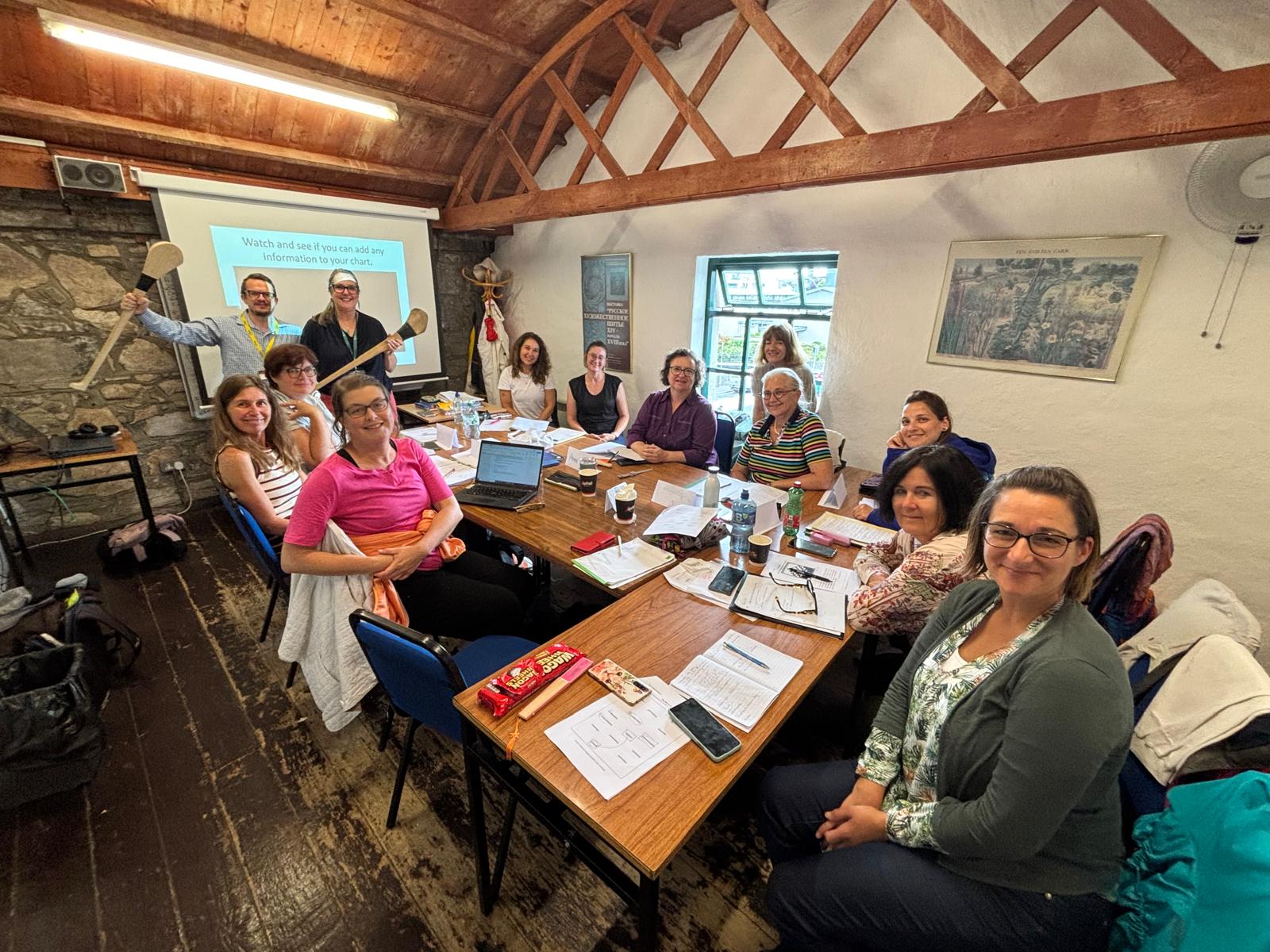
Rather than simply listening to presentations about methodology, participants can experience these approaches through workshops, group activities and practical demonstrations. This active learning model allows teachers to consider not only whether a technique is theoretically effective, but also how it actually feels to participate in it.
A methodology course can therefore become a testing ground for new ideas. Teachers can experiment with activities, discuss potential adaptations with colleagues and receive feedback from experienced trainers before introducing them into their own classrooms.
One educator who participated in a Teaching Methodology programme at the Centre of English Studies (CES) in Dublin highlighted exactly this practical value. Reflecting on the experience, the participant explained that the course had provided many useful ideas that could be applied directly to their own teaching. The quality and approachability of the teachers were also central to the experience, demonstrating how important the relationship between trainer and participant remains in effective professional development.
For language teachers, this combination of practical methodology and international exchange can be particularly valuable. An activity suggested by a trainer may develop further through conversations with participants from several countries, each suggesting how it could be adapted to their own students. Professional development then becomes collaborative rather than prescriptive, with teachers actively contributing to the learning process.
Language Teaching in a Changing Digital Landscape
The rapid development of digital technology is creating both opportunities and challenges for language educators. Artificial intelligence, translation technologies, digital collaboration platforms and increasingly sophisticated language-learning applications are changing the ways in which students encounter and practise languages.
For teachers, the challenge is no longer simply deciding whether technology belongs in the classroom. The more important question is how it can be used thoughtfully and effectively while preserving the human interaction that lies at the heart of language learning.
International professional development provides valuable space to explore these questions with other educators. Teachers can experiment with digital tools, compare experiences and discuss issues such as academic integrity, digital literacy, accessibility and the responsible use of artificial intelligence.
Rather than viewing technology as a replacement for traditional teaching, Erasmus+ courses can help educators consider how digital tools might support creativity, differentiation and communication. Artificial intelligence might assist with generating differentiated reading materials, creating discussion prompts or providing additional language practice, while collaborative platforms can connect students with peers in other countries.
The teacher’s role remains essential. Technology can generate content quickly, but teachers provide context, judgement, encouragement and the understanding of individual learners that technology cannot replicate. Professional development can help educators develop the confidence to make informed decisions about when technology adds value and when a simpler human approach remains more effective.
Learning Beyond the Classroom Through Cultural Immersion
One of the most distinctive aspects of international professional development is that the learning environment extends far beyond the training centre. Cultural experiences are not simply an enjoyable addition to an Erasmus+ mobility. For language educators, they can become an important part of professional and linguistic development.
Ireland provides an especially rich environment for this kind of learning. Literature, music, history, storytelling and contemporary culture all offer opportunities to explore the relationship between language and identity. A guided walk through Dublin, a visit to a museum in Cork or an evening experiencing traditional music in Galway can provide material and inspiration that teachers later take back into their classrooms.
Britt Schmidt from the University of Hamburg experienced this combination during an English and Irish Culture programme at Emerald Cultural Institute in Dublin. Alongside the quality and professionalism of the teaching, she highlighted the welcoming international environment and the interest of the cultural programme, describing her time in Dublin as a wonderful experience.
For teachers, these experiences can transform cultural teaching from something abstract into something personal. Instead of presenting students with information taken solely from a textbook, an educator can talk about places they visited, conversations they had and traditions they experienced themselves. Photographs, stories and observations collected during a mobility can later become authentic classroom resources.
Cultural immersion also develops intercultural competence, an increasingly important element of language education. Understanding another culture involves more than learning facts about festivals, food or history. It requires curiosity about different perspectives, awareness of assumptions and a willingness to interpret behaviour within its cultural context.
Language teachers are particularly well placed to encourage this kind of understanding because their subject naturally crosses cultural boundaries. International mobility strengthens their ability to help students see language not simply as an academic subject, but as a way of connecting with other people and understanding the world from different perspectives.
Building an International Network of Educators
Professional learning becomes particularly powerful when teachers are able to learn from one another. Erasmus+ creates environments where educators from different countries can meet, compare experiences and develop relationships that would be unlikely to emerge through purely national professional development.
During an international course, conversations frequently move beyond the formal curriculum. Teachers discuss how their schools approach assessment, inclusion, behaviour, technology, sustainability and student wellbeing. They compare curricula and share resources, while discovering both the similarities and differences between their educational systems.
These relationships can continue long after participants return home. Teachers may remain connected professionally, exchange classroom materials, organise virtual activities between students or begin discussing future Erasmus+ partnerships. In some cases, a one-week professional development programme becomes the starting point for years of European collaboration.
Sigrid from Italy provides a particularly good example of the longer-term relationships that can develop through international learning. After initially participating in a Teacher Refresher Methodology course at Bridge Mills IH Galway Language Centre, she returned to Galway with further groups for English language development and Irish cultural experiences. Her continued involvement reflects something important about successful Erasmus+ mobility: the strongest programmes do not simply deliver a course, they build trust and professional relationships.
The international dimension also reminds teachers that many educational challenges are shared. Concerns about student motivation, digital distraction, inclusion, teacher workload and changing communication habits are not confined to one country. Discussing these issues with colleagues from across Europe can provide both reassurance and practical inspiration.
Sustainability and the Wider Role of Language Education
Education for sustainability is becoming increasingly important across European education, and language classrooms have a valuable contribution to make. Topics such as climate change, responsible consumption, biodiversity and sustainable communities naturally lend themselves to discussion, project work and collaborative language activities.
For language teachers, sustainability provides opportunities to combine linguistic development with wider educational goals. Students might debate environmental policies, create campaigns, research sustainable practices in different countries or collaborate with international partners on shared projects. Language becomes the tool through which students explore issues that affect their future.
Erasmus+ professional development can help teachers consider how these themes can be integrated naturally rather than treated as additional curriculum content. Working alongside educators from other countries is particularly valuable because sustainability challenges are inherently international.
Valentina and Gotz from Italy experienced this during their training at Atlas Language School in Dublin. They particularly valued the international environment, course content, materials and teaching, noting that the focus on sustainability connected directly with what they were already teaching in their secondary school.
Their experience demonstrates how effective professional development can strengthen work that is already taking place within schools. Erasmus+ does not necessarily require teachers to return home and completely reinvent their practice. Sometimes its greatest value lies in providing new resources, perspectives and confidence that allow existing priorities to develop further.
How Erasmus+ Can Support Whole School Development
Although Erasmus+ mobility often begins with an individual participant, its impact should not end with that person. When professional development is planned strategically, the knowledge and experience gained through mobility can contribute to wider school improvement.
A language teacher returning from an international course might share new classroom activities with colleagues, lead an internal workshop, introduce digital resources or contribute to curriculum planning. Experiences from another educational system may also encourage broader conversations about teaching practice within a department or school.
This is why preparation before mobility is important. Participants who identify clear learning objectives before travelling are better able to evaluate what they have gained and consider how it can support their organisation’s priorities.
Schools can strengthen this impact by creating opportunities for participants to share their learning afterwards. A short staff presentation, resource bank, departmental workshop or demonstration lesson can help translate an individual mobility into collective professional development.
The benefits can extend beyond teaching methodology. International mobility can strengthen confidence, leadership skills and intercultural awareness, particularly for educators who have had limited opportunities to work internationally. Staff who return enthusiastic about their experience can also encourage colleagues to participate in future European projects.
Over time, this can contribute to a more outward-looking school culture where international collaboration becomes part of professional development rather than an occasional activity.
Why Ireland Is an Ideal Destination for Language Teachers
For educators seeking professional development through English, Ireland offers a distinctive combination of academic quality, cultural richness and opportunities for genuine language immersion. English is encountered naturally throughout everyday life, giving participants opportunities to practise communication continuously rather than only during scheduled lessons.
Ireland also has a long-established international education sector with extensive experience welcoming teachers, students and education professionals from across Europe. Training centres in Dublin, Cork and Galway offer different environments while sharing a strong emphasis on language education, teacher development and cultural experience.
Dublin provides the energy and resources of a European capital, with museums, galleries, universities, literary heritage and an extensive cultural programme. Participants can finish a morning of professional development and spend the afternoon exploring the city’s history, parks and neighbourhoods while continuing to use English naturally.
Cork offers a smaller city environment with a strong cultural identity and a welcoming atmosphere, while Galway provides an opportunity to experience the character of Ireland’s Atlantic coast and one of the country’s most distinctive cultural cities. Each destination offers something different, allowing schools and individual participants to choose an environment that best suits their objectives.
Perhaps most importantly for language educators, Ireland provides countless opportunities for informal communication. Conversations with local people, fellow participants and international students become part of the learning process. These spontaneous interactions often provide some of the most memorable moments of a mobility because they allow participants to use language for its real purpose: connecting with other people.
Turning Professional Development into Lasting Classroom Impact
The true value of Erasmus+ should ultimately be measured by what happens after participants return home. A successful mobility does not end when the flight lands or the certificate is issued. Its impact continues through the ideas teachers implement, the resources they share and the professional relationships they maintain.
Teachers can strengthen this impact by reflecting deliberately on their experience. Keeping notes during the course, collecting resources and identifying activities that could be adapted for particular classes makes it easier to translate professional learning into classroom practice.
It is equally useful to distinguish between ideas that can be implemented immediately and those that require longer-term planning. A new speaking activity might be introduced the following week, while a CLIL project, digital strategy or international partnership may require discussion with colleagues and school leadership.
Sharing the experience is another important part of the process. When teachers explain what they learned and demonstrate practical examples, colleagues who did not participate in the mobility can still benefit from it. This multiplication of knowledge helps Erasmus+ investment reach far beyond the individual participant.
Teachers should also maintain the professional connections they have made. International networks become more valuable over time when educators continue exchanging ideas, resources and experiences. Digital communication makes it easier than ever for relationships formed during a week in Ireland to develop into long-term professional collaboration.
Investing in Teachers Means Investing in Students
The most important outcome of professional development is ultimately the effect it has on learners. Teachers who feel confident, curious and professionally motivated are better positioned to create classrooms where students experience those same qualities.
For language educators, Erasmus+ offers an unusually powerful combination of professional learning, language immersion, cultural experience and international collaboration. Teachers can strengthen their own communication skills while discovering new methodologies, exploring contemporary educational challenges and learning alongside colleagues from across Europe.
The experience also reinforces something fundamental about language education. Languages are not simply subjects to be studied for examinations. They allow people to exchange ideas, understand different cultures, collaborate across borders and participate more fully in an interconnected world.
When teachers experience that international connection themselves, they return to their classrooms with more than new activities and resources. They bring stories, relationships, cultural understanding and renewed enthusiasm for the possibilities that language learning can create.
For schools considering their next Erasmus+ mobility, investing in language teachers can therefore have an impact far beyond one course or one member of staff. It can strengthen teaching practice, support internationalisation, develop European networks and help create classrooms where students see language learning as something relevant, practical and connected to the wider world.
At its best, Erasmus+ gives educators the opportunity to become learners again, to challenge familiar ways of thinking and to return home ready to share what they have discovered. For language teachers in particular, that combination of learning, communication and cultural exchange captures exactly what their subject is ultimately about.