Some of the most useful moments at an international conference happen outside the seminar room. They happen over lunch, while waiting for the next session to begin, or during an unexpected conversation with someone whose work offers a completely different perspective. A presentation may introduce an idea, but it is often the discussion afterwards that helps us understand what that idea could mean in practice.
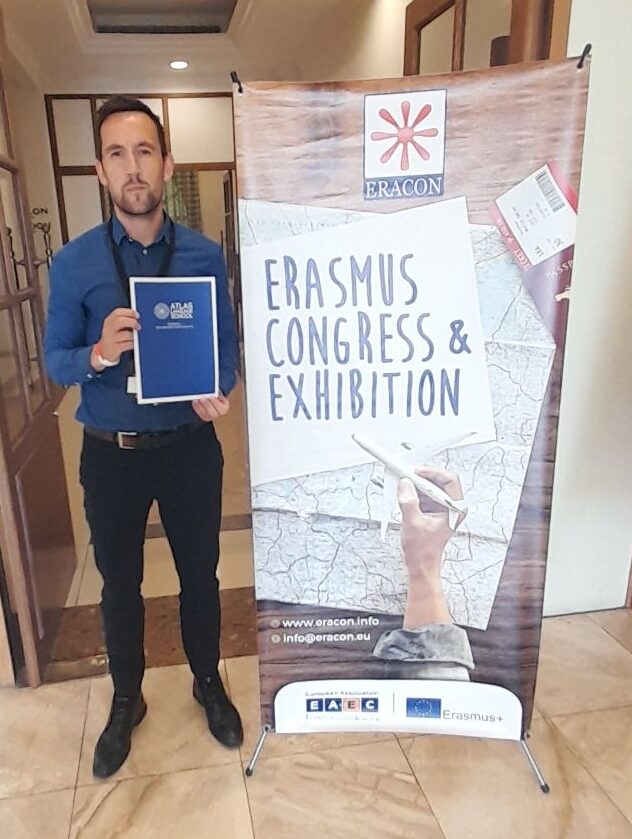
This was one of the lasting impressions that Paul Finnerty, Erasmus Training Coordinator at Atlas Language School brought home from ERACON 2026. Paul attended the event on behalf of Atlas Language School and Erasmus Courses Ireland, contributing to the seminar programme while also meeting Erasmus+ professionals from across Europe.
What Is ERACON and Why Does It Matter for Erasmus+ Cooperation?
ERACON 2026 brought together Erasmus+ coordinators, educators, researchers and university representatives from Europe and beyond.
Held in Paphos, Cyprus, from 22–26 June 2026, the Erasmus Congress and Exhibition combined plenary sessions, workshops and presentations with university meetings and informal networking opportunities. Topics included Erasmus+ staff mobility, inclusion, digital transformation, artificial intelligence, funding, quality standards and international cooperation.
For Paul, the value of the gathering lay in the balance between structured learning and the opportunity to build relationships.
“The event was carefully planned, with a range of different workshops to choose from, as well as plenary sessions for all attendees. There were also ample opportunities to develop partnerships through the networking events included in the programme.”
That balance matters. Erasmus+ professionals attend events such as ERACON to hear from experts and keep up with developments in European education. But they also come to meet people who understand the practical realities of planning mobilities, supporting participants and building international partnerships.
These conversations are not simply a pleasant addition to the programme. In Erasmus+, where cooperation across institutions and countries is fundamental, they are part of how progress is made.
Carefully planned events for Erasmus+ coordinators create space for education professionals to exchange experience, identify shared priorities and explore future cooperation.
How Can Erasmus+ Staff Mobility Create Measurable Impact?
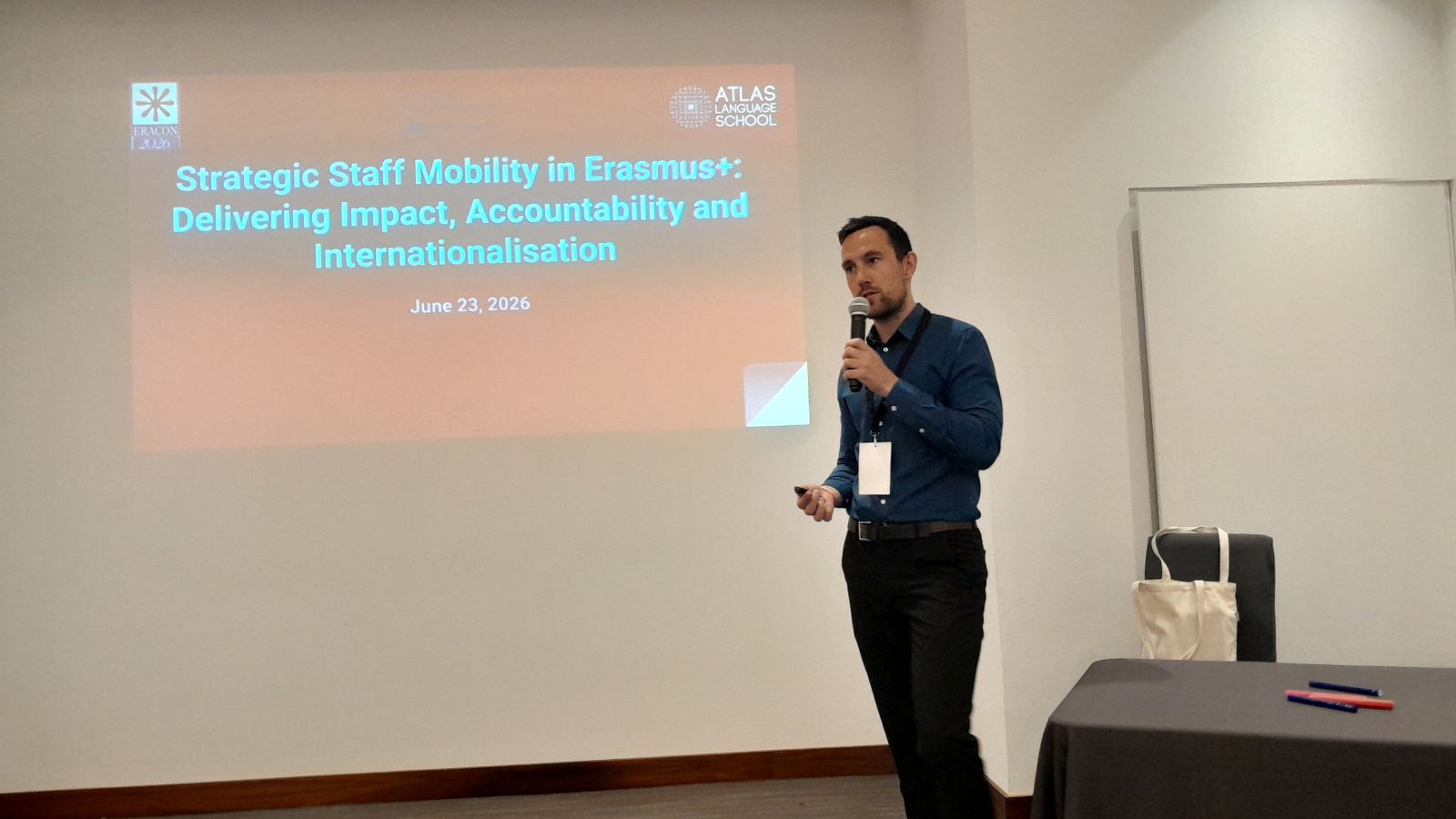
Paul’s presentation, Strategic Staff Mobility in Erasmus+: Delivering Impact, Accountability and Internationalisation was developed jointly by Atlas Language School and Erasmus Courses Ireland.
It explored how universities and other education institutions can make KA1 staff mobility more purposeful, measurable and relevant to their wider priorities.
It is relatively easy to record how many people travelled, which Erasmus+ training courses they attended and whether the necessary documentation was completed. It is more difficult, but ultimately more important, to understand what changed as a result.
Did the participant return with ideas that influenced teaching or working practices? Was new knowledge shared with colleagues? Did the experience build confidence in communicating internationally? Did it contribute to greater inclusion, digital readiness or a new European partnership?
These are the questions that move Erasmus+ staff mobility beyond participation and towards meaningful institutional impact.
Institutions planning Erasmus+ staff mobility for universities increasingly need to consider what will happen after a participant returns home, not only what will happen during the course itself.
Paul’s presentation focused on several practical ways of approaching this:
- identifying a genuine professional or institutional need;
- establishing clear learning outcomes before the mobility;
- choosing structured professional development that responds to those needs;
- collecting useful evidence of learning;
- sharing knowledge after the participant returns; and
- considering how the experience could contribute to longer-term institutional development.
The session was well attended, and Paul found the audience engaged and receptive. Several participants commented on the practical nature of the presentation, particularly its suggestions for measuring the success of a mobility after participants return to their home institutions. However, another session at ERACON raised an equally important issue: the need to maintain a balance between accountability and the human purpose of Erasmus+.
“Rules, regulations and mechanisms are useful for ensuring successful mobilities. However, by focusing too much on paperwork and evidencing good practice, we can sometimes fall into the trap of neglecting the needs of the real targets of the Erasmus+ mobility programme: students and education professionals.”
Good administration matters. Erasmus+ funding must be used responsibly, activities need to be properly planned, and institutions should be able to demonstrate what has been achieved. But measurement should help us understand impact, rather than becoming a substitute for it.
Not everything of value can be neatly recorded in a spreadsheet. Confidence, curiosity, professional relationships and a willingness to try something new may be difficult to quantify, but they are often among the most important outcomes of an international learning experience.
The European Commission’s official guidance on higher education staff training provides further information about professional development opportunities through Erasmus+.
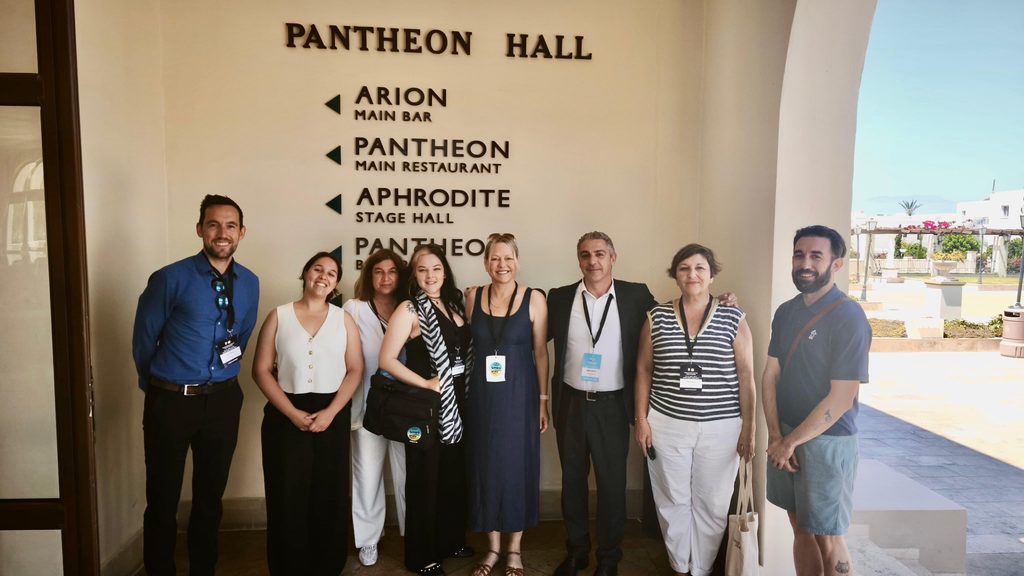
Why Does Face-to-Face Networking Still Matter in Erasmus+?
Online meetings have made European cooperation more accessible. They allow people to work together across countries without the time, cost and environmental impact associated with frequent travel. But they do not entirely replace being together.
“I still believe meeting someone face-to-face is extremely valuable. Being physically present allows you to build more rapport with other people and respond to the atmosphere in the room.”
When people meet in person, conversations are often less rigid and less focused on reaching an immediate outcome. We notice facial expressions, gestures and tone of voice. We can sense when someone is interested, uncertain or keen to continue a discussion. There is also more room for the unexpected.
One of Paul’s most memorable encounters at ERACON was with Johannes Gehringer, Policy Officer for Higher Education and Erasmus+ at the European Commission.
After attending his detailed plenary session on European education targets and achievements, Paul happened to sit with him over lunch. Their conversation offered a more informal insight into the inner workings of the European Commission and the range of projects and responsibilities involved in supporting higher education and Erasmus+.
Paul could have watched a presentation online. What he could not have planned was the conversation over lunch.
This is where the wider value of international gatherings becomes clear. A scheduled meeting may lead to a useful contact, but an informal conversation can reveal shared interests and possibilities that neither person had previously considered.
Paul had a number of fruitful conversations during ERACON’s formal meetings and informal networking sessions. Several of these are expected to continue and may develop into more concrete partnerships.
A conversation at a conference can become the beginning of a staff mobility, an exchange of good practice, a collaborative project or a lasting relationship between institutions. Networking is therefore not separate from Erasmus+ impact. It is one of the ways that impact begins.
Why Choose Ireland for Erasmus+ Staff Mobility?
Events such as ERACON also help Irish education providers understand the changing needs of European institutions and the professionals they support.
Ireland is a highly attractive destination for Erasmus+ staff mobility. English is naturally part of its appeal, but it is not the whole story. Participants are also looking for high-quality professional development, a welcoming learning environment and opportunities to build confidence using English in real professional and social situations.
Paul believes that the combination of educational quality and human connection gives Ireland a distinctive place within the wider Erasmus+ community.
“Ireland is a highly sought-after destination for Erasmus+ mobility, due both to the appeal of the country itself and its reputation for quality education. Erasmus Courses Ireland brings these elements together by providing a high standard of educational services focused on our partners’ needs, while retaining the essence of Irish hospitality and openness.”
Through its network of experienced Erasmus+ training centres Erasmus Courses Ireland welcomes teachers, academic staff, administrative teams and other education professionals undertaking structured professional development.
Participants can choose between distinctive Erasmus+ destinations across Ireland, with courses available in Dublin, Cork and Galway.
Each city provides a different setting, but the purpose remains the same: to combine professional learning with cultural immersion, international exchange and the opportunity to build relationships with colleagues from other European countries.
A successful mobility should not simply end with a certificate. Participants should return to their institutions with practical knowledge, greater confidence, fresh perspectives and professional relationships that continue after the programme itself has ended.
Building Lasting European Partnerships Through Erasmus+
At its heart, Erasmus+ is about connection.
It brings together people working in different countries and education systems who often share many of the same ambitions and challenges. By giving them opportunities to learn with and from one another, the programme strengthens professional practice, encourages new ideas and builds relationships across borders.
Well-planned conferences such as ERACON create the conditions for this to happen. The presentations and workshops provide structure and access to expertise. The meetings, shared meals and informal conversations allow people to explore how that knowledge relates to their own work. Both are necessary.
Professional development should produce meaningful learning and measurable outcomes. But it should also create space for curiosity, openness and human connection. Without those elements, international cooperation risks becoming a series of transactions rather than a genuine exchange of knowledge and experience.
The value of ERACON 2026 was therefore not limited to what appeared in the official programme. It could also be found in the questions asked after presentations, the experiences shared between colleagues and the conversations that may now grow into future partnerships.
That is one of the enduring strengths of Erasmus+: bringing people together, helping them understand one another’s perspectives and giving them the opportunity to create something that continues long after the mobility itself has ended.
To explore the professional development opportunities available, view our Erasmus+ training programmes in Ireland.
If you would like to discuss your institution’s staff mobility objectives or find the most suitable programme, contact the Erasmus Courses Ireland team.