CPD Courses for Teachers in Ireland: The Future of Professional Development
Professional development is changing rapidly across European education. Teachers, lecturers and education staff are working in an environment shaped by artificial intelligence, digital transformation, internationalisation, changing learner expectations and an increasing need for collaboration across borders. As a result, CPD courses for teachers can no longer be limited to occasional workshops or general training that sits apart from day-to-day professional practice.
Effective CPD needs to help educators develop skills they can use immediately while also preparing them for longer-term changes in education. This can include digital competence and responsible use of AI, contemporary teaching methodology, English communication, inclusion, sustainability, intercultural competence and the ability to work confidently in international environments. For teachers and higher education staff participating in Erasmus+ mobility, professional development also provides an opportunity to learn alongside colleagues from other European countries and bring new approaches back to their own institutions.
Why CPD courses for teachers need to evolve
Traditional professional development has often followed a familiar model: a one-day workshop, occasional conference or short training session delivered to a broad group of staff. These activities can still be valuable, but they are most effective when they respond to genuine professional needs and give participants opportunities to practise, reflect, exchange ideas and consider how new approaches can be applied in their own teaching contexts.
Education itself has become more complex. Teachers and academic staff are expected to work confidently with digital platforms, artificial intelligence and blended learning while also responding to increasingly diverse classrooms and supporting learners with different needs. Internationalisation has added another dimension, with education professionals increasingly collaborating across institutions, participating in European projects and communicating with colleagues and learners from different linguistic and cultural backgrounds.
Modern CPD therefore needs to connect professional learning with practical application. The European Commission’s Digital Education Action Plan emphasises the need for educators to develop the confidence and competence to use digital technologies effectively, while the current Erasmus+ programme continues to prioritise inclusion, digital transformation, sustainability and participation. Professional development that reflects these priorities can help educators respond to change without losing sight of the quality of teaching and learning.
What should modern CPD courses for teachers include?
There is no single model that suits every teacher or institution, but strong professional development should address both individual skills and wider educational priorities. A useful CPD programme allows participants to explore new ideas, test practical approaches and reflect on how those approaches could work with their own learners, colleagues or institutional context.
Depending on the course and participant profile, modern CPD may include:
- responsible use of AI and digital tools in education
- teaching methodology and learner-centred approaches
- CLIL and language-aware teaching
- English for professional and academic communication
- inclusion, wellbeing and Universal Design for Learning
- sustainability and Education for Sustainable Development
- intercultural competence and international collaboration
- leadership, internationalisation and institutional development.
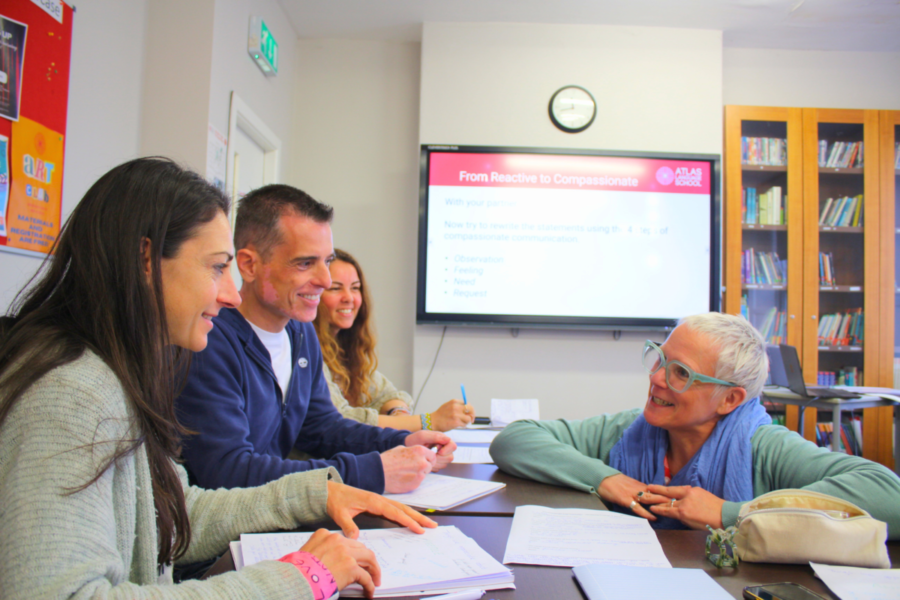
The strongest courses do more than provide information. They create opportunities for discussion, practical experimentation and professional exchange, helping participants leave with ideas and resources they can adapt rather than simply a set of notes from a training session.
Our training centres offer a wide variety of programmes tailored to meet the needs of participants.
How AI and digital learning are changing CPD training
Artificial intelligence and digital technologies are already influencing how educators plan lessons, create materials, assess learning, conduct research and manage administrative work. This means CPD increasingly needs to help teachers understand not only how particular tools work, but also when their use is appropriate, what limitations they have and how questions such as accuracy, privacy, bias and academic integrity should be managed.
Adaptive learning is one example of how technology can make professional development more responsive. Instead of expecting every participant to follow exactly the same pathway, digital tools can support more personalised learning by identifying existing knowledge, providing targeted practice and allowing participants to focus on areas most relevant to their work.
However, technology should support professional judgement rather than replace it. The European Commission’s Digital Education Action Plan places particular emphasis on digitally competent and confident educators who can use technology critically and purposefully. Good CPD therefore combines practical digital skills with discussion about pedagogy, ethics and the wider impact of technology on learners and institutions.
The strategic benefits of CPD for schools and education institutions
Professional development has value beyond the individual participant. When teachers and education staff return from training with new skills, practical resources and international connections, that learning can contribute to wider institutional development if it is shared and applied effectively.
For schools, colleges and universities, CPD can support improvements in teaching quality, digital confidence, inclusive practice and international collaboration. It can also help institutions respond more effectively to strategic priorities such as sustainability, internationalisation and the responsible introduction of artificial intelligence into teaching and administration.
Erasmus+ staff mobility adds an important European dimension to this process. The current programme supports higher-education teaching and administrative staff to undertake professional development abroad, including training activities, job shadowing and observation. Its objectives include developing communication, language, intercultural, digital and green skills, as well as creating stronger links between institutions and encouraging the exchange of good practice.
The greatest value is achieved when mobility is connected to an institution’s broader objectives. A teacher who develops new digital teaching approaches, for example, can share them with colleagues, contribute to internal training or support curriculum development. In this way, individual mobility can become a starting point for wider organisational change.
Why English language development matters in Erasmus+ CPD training
English plays an important role in international education, European mobility and cross-border professional collaboration. For many teachers, lecturers and education professionals, improving English is therefore not simply about achieving a higher language level. It is about being able to participate more confidently in the professional situations that increasingly form part of their work.
For academic and teaching staff, this may include teaching through English, delivering presentations or lectures, participating in international conferences, collaborating on European projects and research, contributing to meetings and supporting international students. Administrative and professional staff may need English for mobility coordination, professional emails, partnership discussions, international-office communication and supporting visiting students and colleagues.
CPD courses that incorporate English development can therefore support both language confidence and professional effectiveness. Ireland provides a particularly useful setting because participants can combine structured training with opportunities to use English naturally during cultural activities, social interaction and everyday life.
All of our training centres offer English language development programmes for teachers and education professionals. Learn more here.
Erasmus+ CPD courses in Ireland for teachers and education staff
Erasmus Courses Ireland brings together established training centres in Dublin, Cork and Galway offering professional development for teachers and education staff. Courses cover a broad range of areas, including English language development, AI and digital education, methodology and CLIL, professional communication, sustainability, inclusion and wellbeing.
Participants can choose programmes according to their professional role, learning objectives and preferred location. Some courses focus primarily on language or methodology, while others explore digital transformation, AI, sustainability or inclusive education. This allows teachers and education professionals to select training that is relevant to their own development rather than following a single standardised CPD model.
The wider mobility experience is also important. Learning alongside participants from different European countries creates opportunities to compare educational systems, discuss common challenges and build professional networks that can continue after the course has finished. Cultural activities and time spent in Ireland add an intercultural dimension that is difficult to reproduce through online professional development alone.
Our programmes are designed to support Erasmus+ staff mobility and professional development. Sending organisations should confirm funding eligibility within their own Erasmus+ project before booking.
From individual professional development to institutional impact
One of the most important questions for any CPD programme is what happens after the participant returns home. Professional development has greater value when new knowledge is shared, tested and embedded rather than remaining with one individual.
Teachers may introduce new classroom activities, digital tools or approaches to assessment. Academic staff may contribute ideas to curriculum development or international programmes, while Erasmus coordinators and professional-services staff may use their experience to improve mobility processes or develop new partnerships. Participants can also share learning through staff meetings, workshops, internal resources or peer mentoring.
This movement from individual learning to wider institutional impact is particularly important in Erasmus+ mobility. The experience abroad can act as a catalyst for professional reflection and international collaboration, but its longer-term value comes from how effectively that learning is transferred back into the sending organisation.
The future of CPD training in Ireland and European education
The future of professional development is likely to be more flexible, more international and more closely connected to real professional challenges. AI and digital technologies will continue to influence teaching and learning, but educators will also need strong communication, intercultural, critical-thinking and collaboration skills to use those technologies effectively.
For teachers and education institutions, this means choosing CPD that is relevant, practical and capable of producing lasting change. Training should help participants develop specific skills while also giving them opportunities to exchange ideas, reflect on their practice and understand how their learning fits within wider European educational priorities.
Ireland offers a strong environment for this type of professional development. Its English-speaking setting, established international education sector and training centres in Dublin, Cork and Galway allow participants to combine structured CPD with language development, cultural learning and professional exchange. For institutions, well-planned mobility can therefore support not only the development of individual staff but also broader goals around teaching quality, internationalisation and organisational learning.
Frequently asked questions about CPD courses for teachers
What are CPD courses for teachers?
CPD courses for teachers are structured professional-development programmes designed to help educators update their knowledge, develop new skills and improve professional practice. Topics can include teaching methodology, digital education, AI, languages, inclusion, sustainability, wellbeing and leadership.
Can Erasmus+ support CPD courses for teachers?
Erasmus+ can support staff training and professional-development mobility where the activity is relevant to the participant’s role and forms part of an eligible Erasmus+ project. Funding and eligibility should be confirmed by the participant’s sending organisation according to its approved project and National Agency requirements.
What CPD courses are available in Ireland?
CPD training in Ireland includes English language development, teacher methodology, CLIL, AI and digital education, professional communication, inclusion, wellbeing and sustainability. Erasmus Courses Ireland works with training centres in Dublin, Cork and Galway.
Who can take part in Erasmus+ CPD training?
Depending on the Erasmus+ sector and project, participants can include teachers, lecturers, academic staff, school leaders, Erasmus coordinators, administrators, trainers and other education professionals. The sending organisation is responsible for confirming participation within its mobility project.
Why choose Ireland for CPD training?
Ireland offers an English-speaking European environment alongside an established international education sector. Participants can combine professional training with English language practice, cultural learning and networking with education professionals from other countries.
How can CPD create wider impact within an institution?
Participants can share new approaches through workshops, staff meetings, mentoring, curriculum development or internal resources after returning home. This helps turn individual professional development into wider organisational learning and longer-term impact.
Do you want to read more about how Erasmus+ CPD programmes can support you and your team?
Why Skills-Based Professional Development Is Becoming Essential for European Educators